
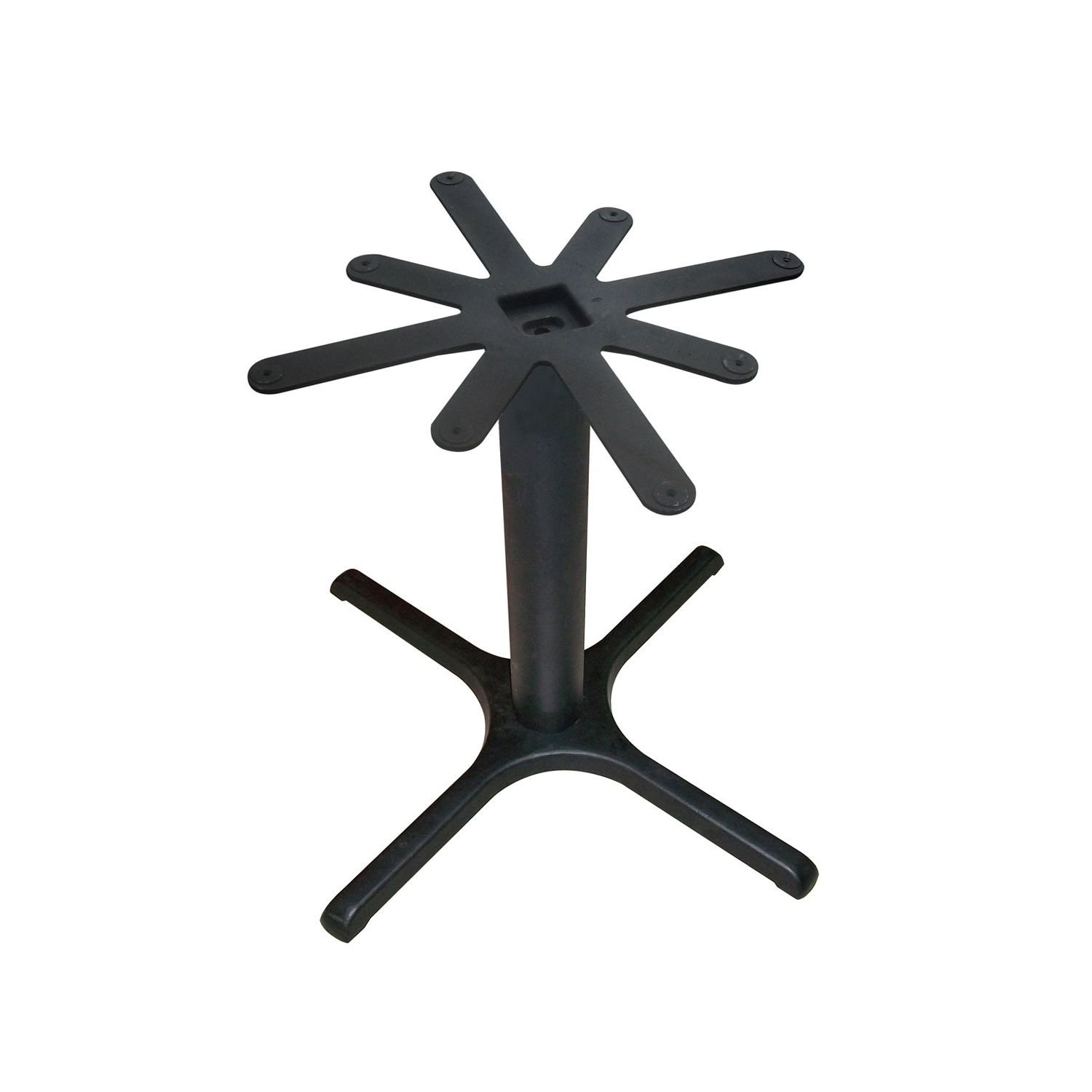
JI4-36TP24 Restaurant Table Base
JI4-36TP24 Restaurant Table Base supports large dining tables in commercial settings. Its four-prong cast-iron layout provides balance, reach, and guest comfort. The base spans nearly thirty-six inches square and carries a twenty-four inch top plate. This footprint anchors heavy tabletops used in restaurants, banquets, and group seating zones. A four inch column stiffens the joint for long spans. The black powder-coat finish resists scratches and daily cleaning cycles. Guests enjoy a stable, relaxed dining experience on every side.
At a Glance
Four-prong 36″ base plate. 24″ spider top plate. 4″ steel column. Cast-iron build. Textured black finish. Adjustable nylon glides for quick leveling.
What It Is
This base belongs to the 4-Prong Series, the heavy geometry line built for oversized tabletops. A wide footprint spreads load across four corners, stabilizing large wood or composite tops. The twenty-four inch plate distributes screws for even stress and clean alignment. Installers bolt the three pieces together for fast setup on site. A four inch column resists bending during active service. Adjustable glides keep tops level across tile, wood, or uneven concrete. The design handles heavy wood and stone tops with consistent stability. Seating lanes stay open because the prongs sit low and outward. Chairs slide close without obstruction, which improves reach and posture. Operators reduce wobble calls while protecting finishes. Planners gain a repeatable platform for multi-site layouts.
Key Specs
The base uses a four-point cast-iron plate measuring about thirty-five and a half by thirty-five and a half inches. A four inch, sixteen gauge steel column connects the base to the twenty-four inch top plate. The finish is a textured black powder-coat that hides marks and matches modern interiors. Overall height is twenty-eight point two five inches for standard dining. Adjustable nylon glides under each prong fine-tune height and pitch. Where floors fight level, pair select zones with self-leveling CT2070 units. Larger bar clusters may benefit from CT2073 to steady frequent resets. Narrow aisles can use compact CT2068 to tame grout lines.
Installation Reminder
Verify pilot holes before mounting tops. Confirm screw length and drive type against your plate map. Level all glides evenly, apply threadlocker, and recheck after the first week.
Recommended Top Sizes
Sizing charts list one base for forty-two inch square tops with ideal balance. One base also supports forty-eight inch square and many fifty-four or sixty inch rounds. For long rectangles, use two bases spaced thirty-six to forty inches apart. Very long communal runs often need three bases with even spacing. Balanced spans reduce bounce at center lines and edges. Guests feel steady elbows and calm glassware during lively service. Servers move trays without catching corners or shaking plates. These choices extend finish life and preserve consistent guest comfort.
Options, Siblings, and Variants
Smaller footprints serve compact tables and tight aisles. Designers often specify the JIB3-22TP12 in cafés or quick-serve rooms. For maximum reach, evaluate the heavy-duty sibling JI5x1.5-36TP24 on oversized spans. Mixed floor plans can combine this base with CT2070 or CT2068 in problem sections. Bar rails and movable pods may prefer CT2073 for quick leveling under pressure. Shared bolt patterns and finishes simplify stocking and training.
Design Insight
Align prongs to table edges for consistent leg room. Keep center seams clear of prong tips. Plan stool arcs and chair paths before drilling.
Why Choose This Base
Stability defines this model, not just mass. The thirty-six inch footprint lowers tip moments at edges and corners. Four prongs distribute load evenly while protecting knee space. The twenty-four inch spider spreads screws to resist torque and peel. A four inch column adds stiffness for confident spans. The finish cleans fast and hides everyday scuffs. Leveling takes seconds with precise glide adjustments. Large tops sit firm, which improves guest comfort and service speed. Managers see fewer complaints and steadier reviews. Over time, that reliability reduces labor waste and field calls.
Featured Answer
When should I specify JI4-36TP24?
Choose it for square tops from forty-two to forty-eight inches. Use it for fifty-four and sixty inch rounds. For long rectangles, specify paired bases with even spacing.
Why the JI Platform Performs
Geometry and material work together here. Four arms place mass where leverage grows during service. A broad plate reinforces screw patterns under shifting loads. The column diameter controls deflection at height. Steel walls resist buckling and keep motion low. Cast iron adds inertia against vibration and bumps. Glides allow micro corrections without shims. Field techs lock bolts with threadlocker for durable hold. Shared parts across sizes reduce training time and mistakes. Layout teams move faster because hardware stays consistent. Guests notice calm surfaces, not wobbly edges.
Start Your Quote
Share target sizes, quantities, finishes, and timelines. Note bar height needs or special spans in your plan. Include quick drawings with plate maps and hole patterns. Our team verifies fit, schedule, and packaging details. After sign-off, you receive a clear proposal and production date. Request more info now and bring predictable stability to your next project.


