
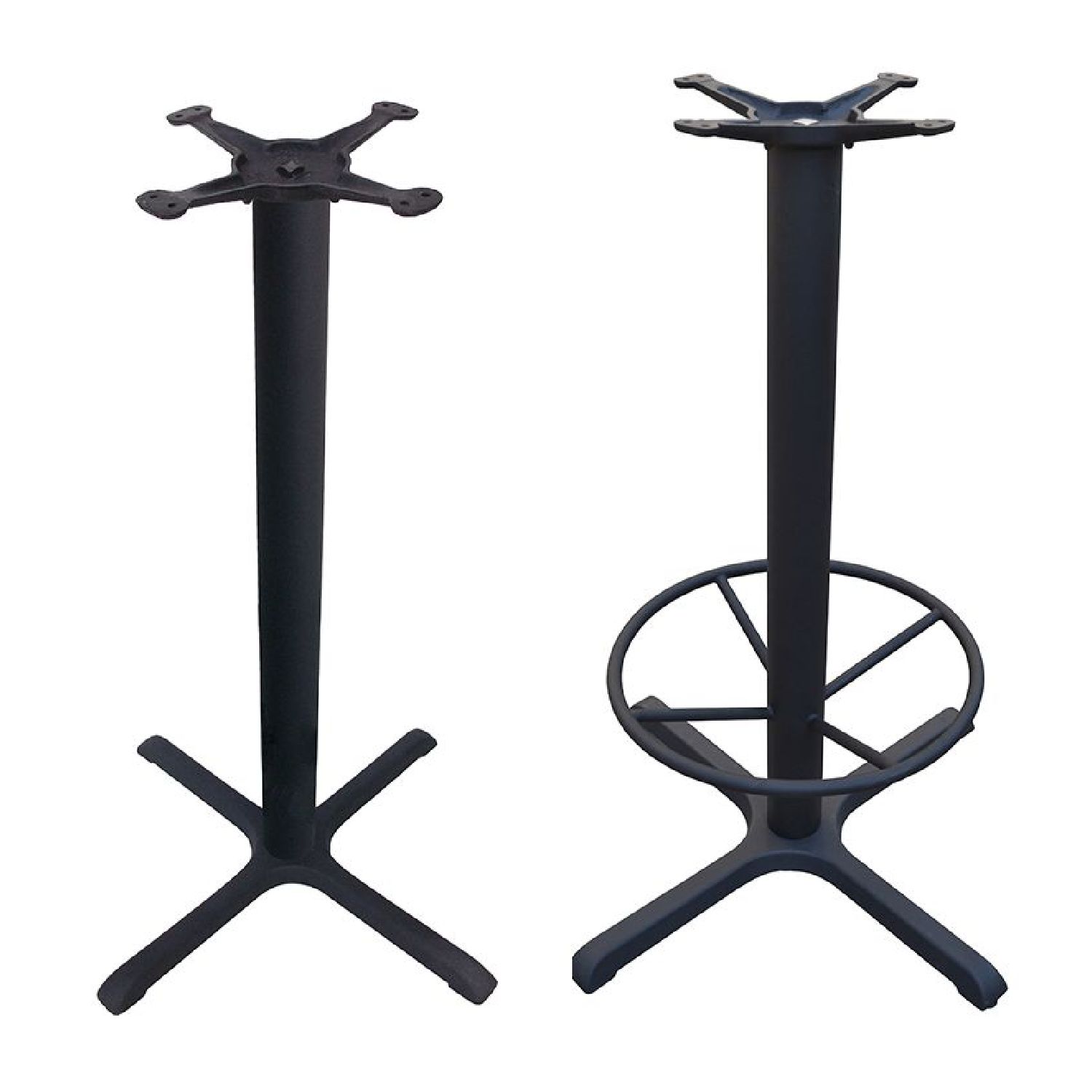
JI3-22TP12BH base
JI3-22TP12BH base supports bar-height tables with compact strength and clean lines. The four-prong layout spreads load to each corner. Guests sit comfortably on any side without knee conflicts. A footring option improves posture at tall seating. Crews assemble the kit quickly with common tools. Leveling glides dial in height on tricky floors. The textured black finish resists scuffs and wipes clean. Operators get steady performance during peak service. Designers keep sightlines clear with a tidy pedestal plan.
At a Glance
Bar height ≈40.375″. 22″ × 22″ footprint. TP12 spider. 3″ or 4″ steel column. Optional footring. Adjustable glides. Textured black finish.
What It Is
This model belongs to the bar-height 4-prong family. It targets small bar tables where floor space matters. The footprint stays compact yet stable for daily use. Four prongs contact the floor with predictable grip. That geometry reduces wobble under leaning guests. A 3 inch column handles typical tops with confidence. Heavier programs can specify a 4 inch column. For round pedestals in nearby zones, compare JI4-28RDTP17 for a clean profile. On stubborn floors, self leveling helpers like CT2018 or CT2059 can calm shake.
Key Specs
Overall height measures about forty point three seven five inches. The cast-iron plate spans roughly twenty two by twenty two inches. A 3 inch steel column ships standard. A 4 inch option supports higher loads. The TP12 top plate measures about thirteen inches. Some charts list a seventeen inch plate as an upgrade. Adjustable plastic glides live under each prong. Through-bolts and threadlocker secure the joints. Hardware tolerances keep the column tight under use. Black powder coat resists chips and cleaner cycles. Kits ship flat for safe handling and staging. Teams move cartons with dollies or two-person lifts.
Installation Reminder
Verify pilot sizes and screw length before mounting. Level all glides, then torque bolts in a star pattern. Recheck level after the first service week.
Recommended Top Sizes
Bar-height charts list one base for twenty four inch squares. One base also supports many twenty four inch rounds. Keep tops light and balanced at this footprint. Upgrade the column for heavier materials as needed. A TP17 plate can broaden screw reach when required. Long rectangles usually require paired bases. Place centers evenly to reduce bounce at span. Add a stabilizer like CT3018 when grout lines cause persistent rock. Test edge steadiness before release to floor. Train teams to check level during resets. Small habits prevent creeping wobble during rush.
Options, Siblings, and Variants
Choose the BHFR version when guests need foot support. The footring improves posture at tall seating. For matching bar areas, review JIB3-27TP12BH/JIB3-27TP12BHFR to extend style. Mix in round pedestals like JI4-28RDTP17 where sightlines favor a single post. Tough aisles can benefit from CT2059 pairing on isolated tables. All versions share familiar bolt logic and parts. Therefore, spares and training remain simple.
Design Insight
Center prongs on chair lanes, not just table edges. Check stool arcs with real units. Mark glide positions before final torque.
Why Teams Choose TimeWorn
We map plates, fasteners, and setbacks before production. Samples confirm finish sheen under your cleaners. Crates include labeled diagrams for quick staging. Hardware packs match each room and table set. Schedules include steady tracking and contact windows. Field guides show leveling and torque sequences. Multi-site rollouts reuse the same patterns. Teams learn once and move faster. Punch lists shrink because fits land right. Your staff spends time with guests, not repairs. That process protects openings and brand goals.
Pro Tip
Keep spare glides at each station. Swap worn feet during resets. Tiny fixes prevent wobble and protect guest comfort.
Why the JI Platform Wins
Geometry and material work together here. Prongs place mass where leverage grows most. That strategy reduces roll at edges and corners. Columns control deflection at bar height. Cast iron adds inertia against bumps and vibration. Wide spiders distribute screws across strong fibers. Glides handle small floor shifts without shims. Bolt joints lock with threadlocker for hold. Shared parts reduce training loads across teams. Designers keep one look across sizes and heights. Operators scale confidently with fewer surprises.
Featured Answer
When should I specify this base?
Use it for twenty four inch squares or rounds. Pick the footring for comfort. Upgrade column or plate for heavier tops.
Get a Fast Spec and Quote
Share top sizes, quantities, and finishes. Note footring needs and column choice. Include quick drawings with hole maps if possible. We confirm fit, packaging, and timeline in writing. Finish samples ship for sign-off before build. After approval, you receive a clear proposal and schedule. Request more info now and move forward with confidence.


