
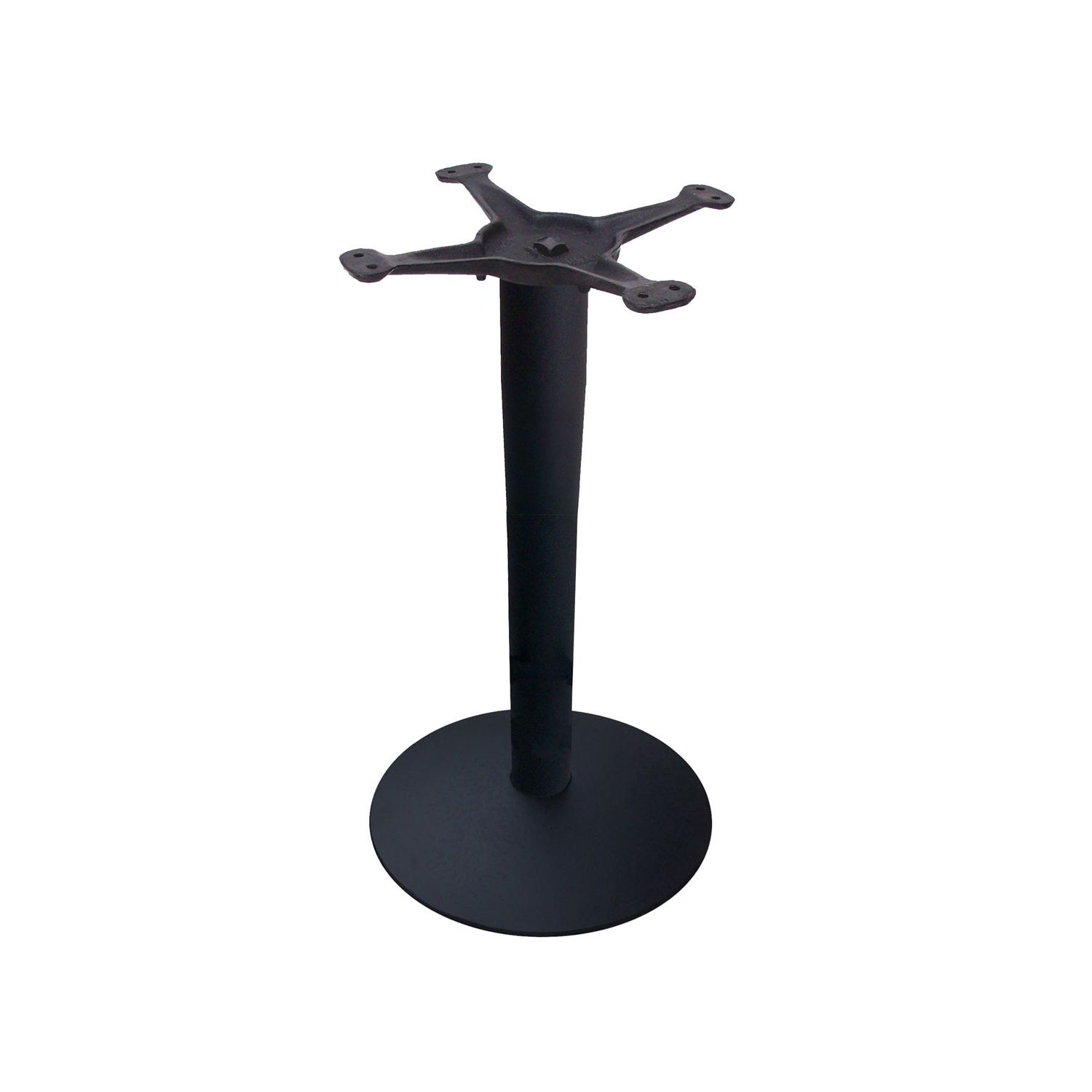
Domed Round Table Base
The Domed Round Table Base supports busy dining rooms with compact strength. It fits tight layouts and steady service needs. Guests approach from any side with fewer foot snags. Crews assemble fast with common tools and clear parts. Additionally, leveling glides help fine tune on tile or wood.What It Is
Meet two models for flexible dining layouts. JI3-18RDTP12 uses an 18 inch round footprint. JI3-22RDTP12 uses a 22 inch round footprint. Both stand at 29 inches for dining height. Each model features a domed cast iron base with five contact points. That design concentrates mass while keeping a compact circle. The 3 inch steel column locks tops with a cast iron spider. Moreover, the textured finish hides scuffs during daily resets. You can match this base with round or square tops.At a Glance
Dining height 29″. 18″ or 22″ round base. 3″ steel column. 13″ top plate standard. Five adjustable glides. Textured black finish.
Size & Compatibility
Choose the footprint to match span and traffic. The 18 inch model supports tops to about 30 inch round. It also supports 24 by 48 inch rectangles with one base. The 22 inch model supports 24 by 36 and 30 by 42 inch tops. Larger or heavier tops may require two bases. Additionally, heavier materials benefit from the larger footprint. For broader rounds, compare the larger JI4-28RDTP17 in the same visual family. For long rectangles, explore self leveling options like CT3006 to reduce shim time. Plan top sizes with real room paths. Start with aisle width from our table size guide. Next, confirm clearances during a taped layout test. Finally, review finish care on care and cleaning. You can also explore restaurant tabletops for species and styles. For base families, scan our table bases overview. When comparing footprints, review compact counter and dining options like CT2061 and CT2063. If bar height layouts are in play, evaluate CT2072 for consistent seam heights.Use Cases
Use the 18 inch footprint for smaller rounds. It thrives in cozy alcoves and tight banquettes. Choose the 22 inch footprint for mid sized tops. It suits high turnover dining and fast resets. The domed plate stays friendly to foot traffic. Servers glide trays around smooth curves. The five glide points resist rock on uneven floors. Additionally, pairs of bases support wider rectangles. That layout helps groups and push together service.Design Insight
Round plates reduce toe stubs near corners. In tight lanes, curved edges improve approach angles and guest comfort.
Installation and Setup Tips
Open all parts and confirm counts before assembly. Center the spider on pilot marks for best balance. Use thread locker on machine screws if vibration occurs. Tighten hardware in a star pattern for even clamp. Additionally, square the column before final torque. Then set each glide to remove wobble on your floor. Finally, recheck all fasteners after the first service day.Installation Reminder
Do not forget to ask us to Pre-drill your Restaurant Tables. You will spend a few hundred dollars with us, or a few thousand dollars for installers to do it during install.
Technical Specs
JI3-18RDTP12: 18 inch round cast iron base. 13 inch cast iron top plate. 3 inch diameter by 25 inch steel column. Overall height 29 inches. Approximate weight 33 pounds assembled. Textured black finish. Five adjustable plastic glides. Options include a 17 inch top plate and a 4 inch column. JI3-22RDTP12: 22 inch round cast iron base. 13 inch cast iron top plate. 3 inch diameter by 25 inch steel column. Overall height 29 inches. Approximate weight 46 pounds assembled. Textured black finish. Five adjustable plastic glides. Options include a 17 inch top plate and a 4 inch column.Request More Info Now!
Care and Maintenance
Wipe bases with mild soap and water. Avoid harsh acids and abrasive pads. Inspect glides during each deep clean. Replace worn parts to preserve level. Additionally, tighten fasteners during monthly checks. For tabletop care, follow our care and cleaning steps. Clean seams before pushing tables together. Then reset glides for a steady surface.Featured Answer
Which round base works best for a 30 inch top?
Pick the 18 inch footprint for most 30 inch rounds. It balances span, weight, and guest approach. For heavier tops or frequent pushes, step up to the 22 inch model. That choice improves stability and reduces shim time during resets.
Options and Variants
Scale the base rather than switch the family. Increase top plate size to 17 inches for wider spans. Move to a 4 inch column for heavier materials. Additionally, consider larger round plates in the same line. That path keeps visual unity across the room. You can standardize hardware and service parts. The result simplifies installs and spares.Why Operators Trust TimeWorn Wood
We build commercial tabletops and support real service demands. Our finishes withstand cleaners and high turnover traffic. We ship nationwide with careful packaging and clear labels. Additionally, our process streamlines approvals and field installs. You can review materials on restaurant tabletops. Then compare models on the table bases overview. Finally, read care steps on care and cleaning to plan resets.Pro Tip
Label base sizes on the underside of tops. That tag speeds pushes and reduces mismatched pairings during peak hours.


