
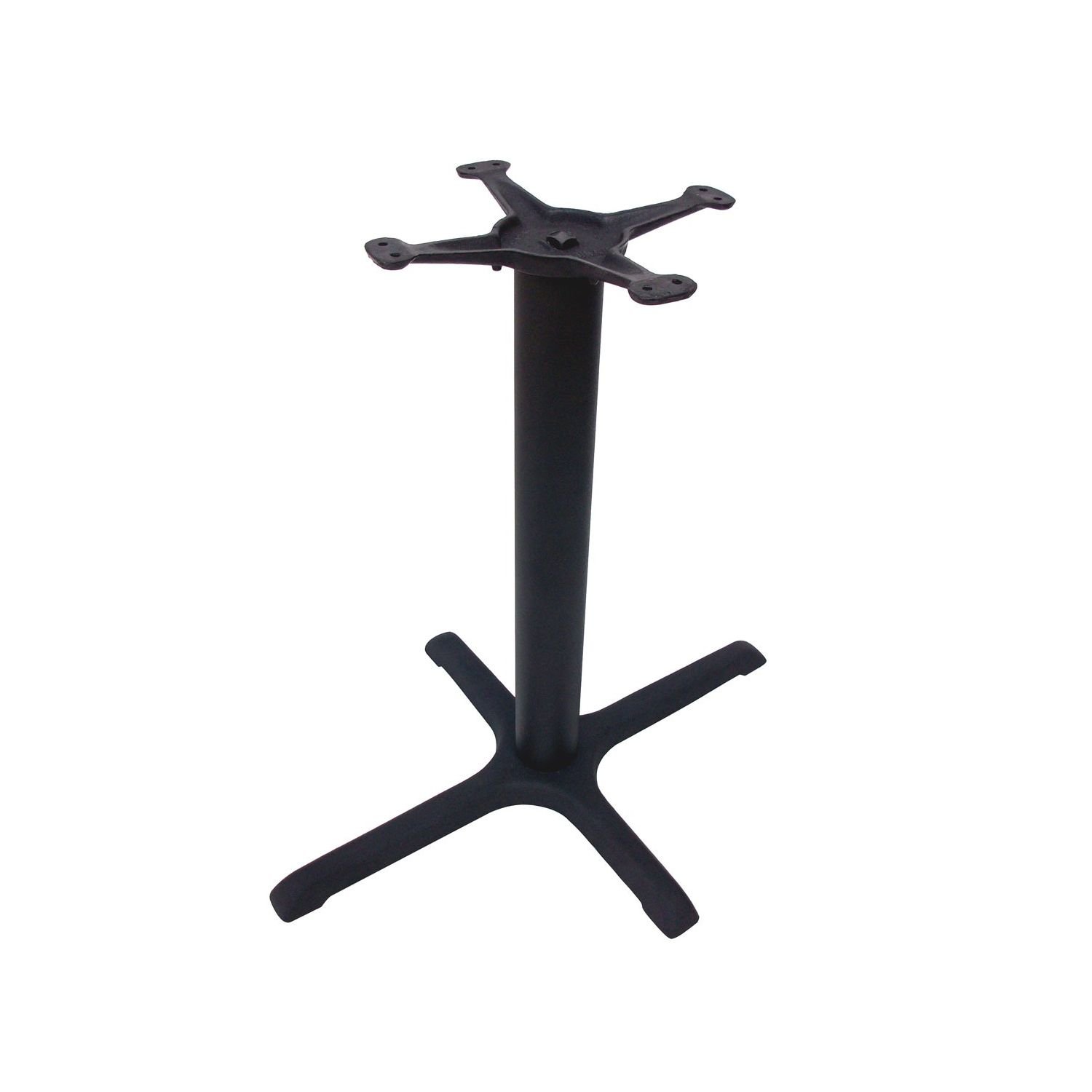
JI3-2230TP12 table base
JI3-2230TP12 table base supports wider dining tops with a compact, four-prong plan. Four contacts grip the floor with confidence. Guests straddle or sit on either side without foot clashes. The rectangular footprint spreads load along the long axis. That reach steadies edges during service. Crews assemble the kit quickly with common tools. Glides fine tune level on tile, wood, or concrete. The textured black finish hides scuffs and wipes clean. Operators gain predictable stability in busy rooms.
At a Glance
Dining height 28.25″. Rectangular 22″ × 30″ class footprint. TP12 cast-iron spider. 3″ steel column. Adjustable nylon glides. Textured black powder coat.
What It Is
This model lives in the 4-Prong Series for commercial dining. The plan uses a rectangular base plate for directional reach. That geometry lowers tip moments on rectangular tops. Four prongs add traction and predictable contact points. Chairs slide close without hitting side rails or legs. Installers bolt the plate, column, and spider in minutes. Parts index square for fast alignment and torque. Glides adjust independently to correct minor floor variance. The finish resists chips and common cleaners. Field teams stage cartons flat to save space. Labels guide room placement and table numbers. Everything supports speed, comfort, and steady service.
Key Specs
Overall height measures 28.25 inches for standard dining. The plate covers about 22 by 29.5 inches in cast iron. A 3 inch round steel column ties the system together. The TP12 spider spans about 13 inches with slotted holes. Slots accept common restaurant screw patterns. Adjustable plastic glides sit under each prong. Through bolts clamp joints with dependable force. Threadlocker helps resist loosening under heavy cycles. The coating is a textured black powder finish. Unit weight trends light for safe handling by two people. Dollies move cartons easily in tight back-of-house halls. Clear labels speed staging and room assignment.
Installation Reminder
Confirm pilot sizes and screw length before mounting. Level all glides, then torque bolts in a star pattern. Recheck level and torque after the first week.
Recommended Top Sizes
One base commonly supports 24 × 36 inch rectangles. Many 24 × 42 inch tops also fall within range. Balance improves when centers align with chair lanes. Round tops near 30 inches work, though squares fit better. Heavier materials increase leverage and edge stress. In that case, upgrade the spider to TP17. The wider plate spreads screws and reduces peel. Long rectangles may need twin bases on center lines. Keep spacing even to reduce bounce across spans. Test rim steadiness before release to the floor. Train staff to check level during resets each shift. Small habits prevent creeping rock during rush. Guests feel calm glassware and steady plates.
Options, Siblings, and Variants
Step to JI3-2230TP17 when tops gain mass. That upgrade adds a 17 inch spider for reach and control. You can also move to JI4-2230TP12 for a 4 inch column. Stiffer columns reduce sway on dense materials. Smaller rooms may shift to JI3-22TP12 for tight aisles. Broader zones may prefer JI3-30TP12 for added footprint. Round footprints exist when a pedestal look fits the concept. Matching finishes keep visuals consistent across the floor. All versions share familiar bolt logic and hardware. Therefore, spares stay simple and training stays short. Techs swap parts quickly without special tools. Designers tune performance while holding one look.
Design Insight
Align the long axis with the tabletop span. Map knee zones before drilling. Check tray paths at full seating with real chairs.
Why Specify This Base
Balance and comfort drive the choice here. The rectangular plate spreads load where spans run long. Four contacts tame wobble and roll at edges. Guests keep natural posture on every side. Staff move trays without clipping corners or legs. Glides deliver micro corrections in seconds. Bolts and columns resist twist under daily use. The finish hides everyday marks and cleans fast. Field calls drop when tables stay quiet. Over time, that reliability protects labor and reviews. Rooms feel calmer, and turns run smoother.
Featured Answer
When should I choose JI3-2230TP12?
Use it for 24 × 36 and 24 × 42 inch tops. Upgrade to TP17 for heavier materials. Add a second base for longer rectangles.
Why Teams Partner With TimeWorn
We align plate maps, fasteners, and setbacks before production. Samples confirm sheen, texture, and cleaner response. Clear install diagrams ride in every crate. Hardware packs arrive labeled by room and table. We share tracking updates and contact windows. Field guides show leveling and torque sequences. Multi-site rollouts reuse the same patterns and parts. Teams learn once and move faster. Punch lists shrink because fits land right. Your staff spends time with guests, not repairs. The process protects openings and long-term value.
Pro Tip
Keep spare glides in a labeled kit. Swap worn feet during resets. Small fixes preserve level and stop creeping rock.
The JI Platform Advantage
Geometry and materials work together here. Arms place mass where leverage climbs under load. Columns control deflection with strong wall sections. Cast iron adds inertia against bumps and vibration. Wide spiders distribute screws across strong fibers. Glides correct height without stacks of shims. Bolt joints lock with threadlocker for lasting hold. Shared parts reduce training time across teams. Designers keep one look across sizes and heights. Operators scale confidently with fewer surprises and calls.
Start a Fast Quote
Share sizes, quantities, finishes, and dates. Note top material and target seating counts. Include quick drawings with hole maps if possible. Our team confirms fit, packaging, and schedule in writing. We can send finish samples for approval. After sign-off, you receive a clear proposal and timeline. Request more info now and move forward with confidence.


