
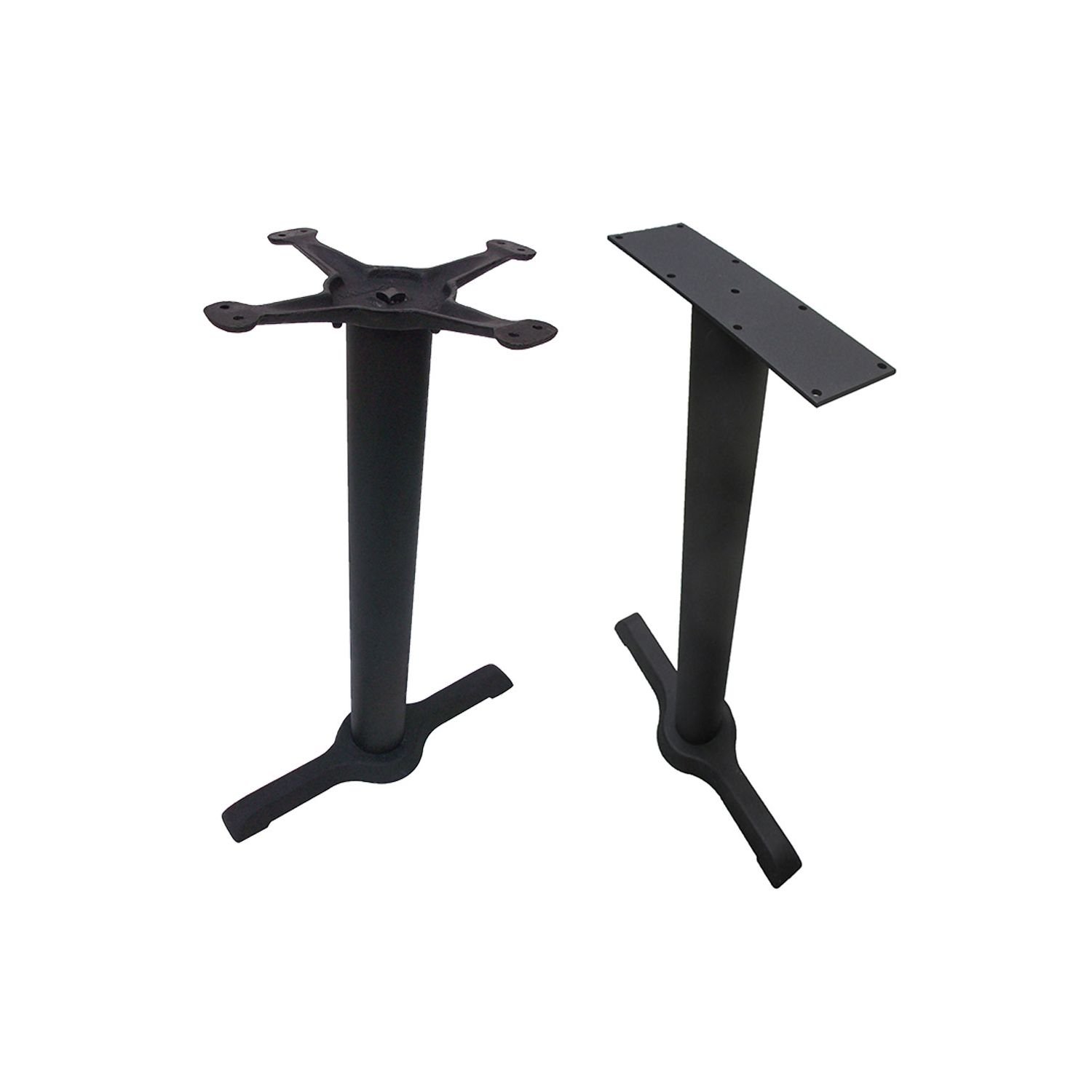
JI3-522TP12 / JI3-522TP3.5x22ADA End Base
JI3-522TP12 / JI3-522TP3.5x22ADA End Base gives rectangular tables clear end access with compact, durable support. This end format places columns near the table edges for comfort. Guests gain ADA clearance and easy leg room at the approach. The design keeps hardware out of traffic lanes while staying firm under load. You can also review our guide on ADA table compliance to confirm layout goals.At a Glance
Dining height 28.25″. End-mount 2-prong style. 5.25″ × 20″ base plate. 3″ steel column. TP12 plate or narrow ADA plate. Adjustable nylon glides. Textured black finish.
What It Is
These bases belong to the 4-Prong family in an end configuration. The look aligns with the broader line for visual consistency. However, the footprint shifts to a compact two-prong plate. That layout preserves knee space at both ends. JI3-522TP12 uses a 13″ cast-iron top plate with a 3″ column. The JI3-522TP3.5x22ADA variant pairs a narrow plate and column set. That combo allows tight placement near the tabletop edge. Installers appreciate the simple three-piece bolt-up kit. Parts index cleanly for quick work on site. For smaller companion tables, many programs pair zones with JIB3-22TP12 to keep styling consistent.Key Specs
Overall height measures 28.25 inches at standard dining. The base plate footprint is 5.25 by 20 inches. A 3 inch round steel column locks to the plates with bolts. JI3-522TP12 includes a 13 inch TP12 spider. The ADA variant uses a 3.5 by 12 inch narrow plate and column. Slots accept common screw patterns across many tops. The finish is a textured black powder coat for durability. Adjustable nylon glides allow precise micro leveling. The assembly ships flat for safe, efficient handling. Crews move cartons with dollies or two-person lifts. Where floors fight level, a stabilizer like CT4205 can steady problem aisles without shims.Installation Reminder
Confirm pilot sizes and fastener lengths before mounting. Set columns square to edges. Level both bases, apply threadlocker, and recheck torque after the first week.
Recommended Top Sizes
End-mount charts call for two bases per rectangular top. Common matches include 24×60 inches and 30×48 inches. Many 30×60 inch layouts also work with this pair. Maintain at least 30 inches between columns for ADA reach. The narrow ADA plate reduces end intrusion for mobility. Heavier tops increase leverage during service. In those cases, confirm spider size and screw spread. Even spacing reduces bounce along the center line. Guests feel steady edges and calm glassware in use. For extra insurance on uneven flooring, add CT4206 to tame grout lines at the ends.Options, Siblings, and Variants
For heavier loads, step to a 17 inch spider where available. A 4 inch column family variant also exists for high-mass tops. Programs that use center pedestals can mix matching prong styles. Designers often standardize around CL2636281A for specialized mounts in tight bays. Large spans may favor a heavy-duty sibling like JI5x1.5-36TP24 to add footprint. All versions keep finish and bolt logic aligned across sites. Therefore, spares and training remain simple for field teams.Design Insight
Measure chair arcs and wheelchair clearances with real units. Mark end setbacks before drilling. Keep power and purse hooks outside knee zones.
Why Specify This End Base
ADA and end seating drive the choice here. The compact plate avoids foot traps under the edges. Columns sit near the ends, not in the middle. As a result, guests approach with fewer obstructions. The finish hides scuffs and cleans quickly. Hardware installs fast and repeats well across sites. Adjustable glides handle minor floor shifts. The design also protects egress lanes in tight rooms. Operators reduce shim stacks and sugar-packet fixes. Over time, steadier tables mean fewer service calls. The program maintains comfort without giving up capacity.Featured Answer
When should I choose the end/ADA base pair?
Use two bases for 24×60 or 30×48 tables. Maintain at least 30 inches between columns. Pick the ADA variant when you need tighter end clearance.
Reasons Operators Choose TimeWorn
We align plate maps, fasteners, and setbacks before production. Samples confirm finish sheen under your cleaners. Clear diagrams label each base and location. Our crates protect edges over long routes. Schedules arrive with steady tracking updates. Field guides show fast leveling and torque sequences. Multi-site rollouts reuse the same patterns and parts. Therefore, training stays short and consistent. Punch lists shrink because fits are right the first time. For compact companion tables, many teams spec JIB3-22TP12 to hold a unified look.Pro Tip
Carry spare nylon glides in a small kit. Swap worn feet during resets. Quick swaps prevent creeping rock and protect guest comfort.
Why the JI End Platform Works
The structure favors reach, clearance, and predictable installs. Compact plates reduce knee conflicts at the ends. Columns tie loads cleanly into the floor. Spider plates spread screws to resist peel and torque. Cast iron adds mass that calms vibration. Steel columns control deflection at height. Glides deliver micro corrections in seconds. Bolted joints lock with threadlocker for lasting hold. Shared parts cut training time across property teams. Designers keep a unified look while tuning function by zone. Guests notice calm tables and clean approaches at every seat.Start Your Quote
Share table sizes, quantities, and setbacks. Note ADA goals and minimum clearances. Include quick drawings with hole maps and end positions. Our team verifies fit and plate selection in writing. We also provide finish samples for approval. After sign-off, you receive a clear proposal and schedule. Request more info now and move forward with confidence.FAQs
What tabletop sizes work with the end-base pair?
Typical matches include 24″ × 60″ and 30″ × 48″ with two end bases. Many 30″ × 60″ layouts also work. Keep the pair evenly spaced and confirm screw spread at the spider for heavier tops.
How do I keep ADA clearance at the ends?
Maintain at least 30″ between the columns for reach. Use the narrow JI3-522TP3.5x22ADA plate when you need tighter end access. Verify chair arcs and wheelchair approach with real units before drilling.
When should I choose TP12 vs. the ADA narrow plate?
Choose TP12 (13″ spider) for standard loads and broader screw patterns. Choose the 3.5″ × 12″ ADA plate when the column must sit closer to the tabletop edge for mobility and leg room.
How do these end bases handle uneven floors?
Adjustable nylon glides enable quick micro-leveling on tile, grout, or older concrete. For challenging aisles, add a stabilizer like CT4205/CT4206 to reduce shims and keep edges steady.
What mounting steps do you recommend?
Confirm pilot sizes and fastener lengths against your plate map. Set columns square to table edges, level both bases, apply threadlocker, then recheck torque and level after the first week of service.


