
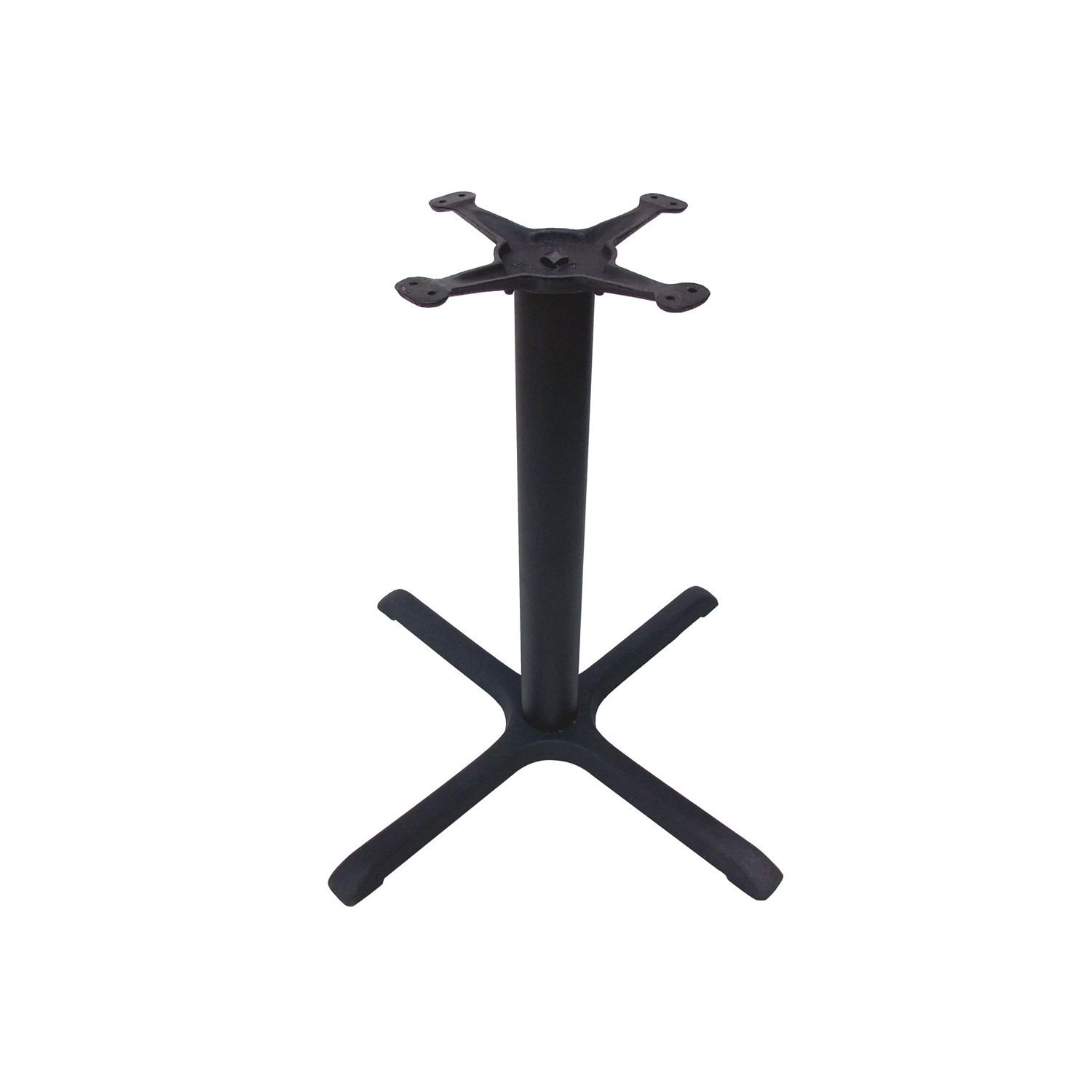
JI3-30TP12 4-prong table base
JI3-30TP12 4-prong table base balances footprint, comfort, and durability for daily service. The pronged layout gives four grounded contact points. Guests can straddle or sit on either side with ease. A compact plan keeps leg space open and clear. Installers bolt the column and spider with simple tools. Crews level the base fast using adjustable glides. The textured black finish hides scuffs and wipes clean. Operators get steady performance and a clean FOH look.
At a Glance
Dining height 28.25″. Approx. 29.5″ × 29.5″ footprint. TP12 cast-iron top plate. 3″ round steel column. Textured black finish. Adjustable plastic glides.
What It Is
This base sits in the 4-Prong family for dining rooms. The design targets medium size tops in active restaurants. Four arms place mass where leverage grows. That geometry limits wobble and edge tip moments. The plan reads tidy under standard tables. Chairs slide in without awkward foot clashes. Install is quick thanks to a three piece kit. Plates and column index for square alignment. Glides fine tune level on tile or concrete. For tough floors, add a self leveling partner like CT4201 to reduce shim stacks. For small companion tables, many teams pair zones with JIB3-22TP12 to keep a unified look.
Key Specs
Overall height measures 28.25 inches at dining height. The cast-iron plate spans about 29.5 inches by 29.5 inches. A 3 inch diameter column connects spider and base. The TP12 spider measures about 13 inches across. Slots accept common restaurant screw patterns with ease. Unit weight trends in the low twenties by spec. The finish is a textured black powder coat. Glides adjust independently to correct floor variation. Through bolts clamp joints for durable hold. Threadlocker prevents loosening during service cycles. The kit ships flat for safe handling and staging. Crews move cartons with dollies or team lifts. Labels speed placement by room and zone.
Installation Reminder
Confirm pilot sizes and screw length before mounting. Level glides, then torque bolts in a star pattern. Recheck level and torque after the first service week.
Recommended Top Sizes
The chart lists one base for a 30 by 30 inch top. A 32 by 32 inch top also falls in range. Many 30 inch rounds work with this model. Heavier materials increase leverage and flex risk. In that case, step up the top plate. A TP17 spider spreads screws and reduces peel. Long rectangles may need twin bases in line. Keep center spacing even to reduce bounce. On narrow ends that need access, consider the end mount pair JI3-522TP12 / JI3-522TP3.5x22ADA to protect ADA reach. Test edge steadiness before final release.
Options, Siblings, and Variants
Grow capacity with a TP17 top plate upgrade. The wider spider expands the safe envelope. You can also move to a 4 inch column variant. That version increases stiffness for heavier tops. For bar height zones with the same style, review JIB3-27TP12BH/JIB3-27TP12BHFR to keep finishes aligned. Outdoor rails or windy patios may prefer a bolt down option like JIP3-7RDTP12SQBH for added security. All versions share familiar bolt logic and parts. Therefore, spares and training remain simple.
Design Insight
Align prongs to edges for clean chair lanes. Map knee zones before drilling. Test tray paths and purse hooks at full seating.
Why Specify This Base
Balance defines this model. The footprint gives reach without bulk. Four prongs create stable, predictable contact. Guests keep natural posture at every seat. Staff move trays without clipping corners. The finish hides everyday marks and cleans fast. Glides allow micro corrections in seconds. Bolts and columns resist twist and sway. The result is steady service and fewer tickets. Over time, those gains protect the labor budget. Ratings improve when tables stay quiet.
Featured Answer
When should I specify JI3-30TP12?
Use it for 30 by 30 inch tops or similar. Consider TP17 for heavier tops. Add a second base for long rectangles and heavier spans.
Reasons to Choose TimeWorn
We plan plate maps and fasteners before production. Samples confirm sheen, texture, and cleaner response. Clear installation diagrams ship with every crate. We label hardware for rooms and zones. Schedules include steady tracking updates. Field guides show quick leveling and torque steps. In bar areas, the bolt down JIP3-7RDTP12SQBH can protect tops during rush. For stubborn floors, a self leveling aid like CT4201 keeps tables calm without shims.
Pro Tip
Keep spare glides in a labeled kit. Swap worn feet during resets. Tiny fixes stop wobble before guests feel it.
Why the JI Platform Performs
Geometry and material work together here. Arms place mass where leverage grows most. That strategy reduces roll at edges and corners. Columns control deflection at height. Cast iron adds inertia against bumps and vibration. Wide spiders distribute screws across strong fibers. Glides handle small floor shifts without shims. Bolt joints lock with threadlocker for hold. Shared parts reduce training loads across teams. Designers keep one look across sizes. For compact layouts, teams often choose JIB3-22TP12 to mirror finishes and maintain flow.
Start Your Quote
Share sizes, quantities, finishes, and dates. Note top material and target seating count. Include quick drawings with hole maps if possible. Our team confirms fit and logistics in writing. We can send finish samples for approval. After sign off, you receive a clear proposal and schedule. Request more info now and move forward with confidence.


